
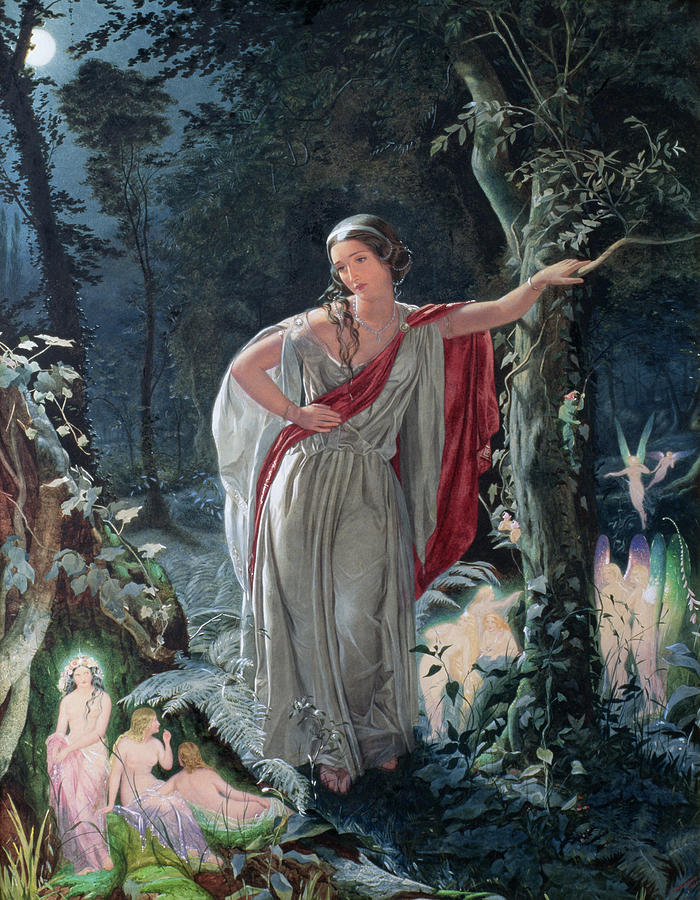
The daughter of Egeus and the beloved of Lysander and Demetrius (at least at the beginning of the play). She is strong-willed, believes in her right to choose her husband based on love, and is fiercely loyal. When crossed, Hermia can become a downright vixen. Hermia is beautiful and has dark hair, though she’s small in stature and somewhat sensitive about it. (Source)
Hermia is one of the strongest female characters in the play. She passionately rejects male authority figures in order to make a powerful claim for her own “sovereignty” in the realm of love. Hermia’s strength is most evident in the opening scene, where she faces off with her father, Egeus, in front of Duke Theseus. In the face of these men’s patriarchal attitudes, Hermia handles herself with poise and unflinching directness. For example, she responds to Theseus’s demand for obedience with these uncompromising words: “So will I grow, so live, so die, my lord, / Ere I will yield my virgin patent up / Unto his Lordship” (I.i.). Theseus outlines harsh consequences if Hermia persists in disobeying her father’s authority. Hermia faces a difficult choice: she must either marry Demetrius, or else give up all freedom and become a nun. In order to avoid the awful choice presented to her, Hermia decides to pursue true love by fleeing Athens with Lysander. Hermia’s flight represents her greatest act of defiance against the patriarchal order. (Source)
 A Midsummer Night's Dream: Online Learning